
Everyone wants good value. That is entirely reasonable. When you are investing in a new wood floor, comparing quotes and looking for a competitive price is sensible — and there is nothing wrong with it.
The problem is not price-consciousness. The problem is what gets cut when a price is too low to be credible.
Flooring installation is a skilled trade. The materials cost what they cost. The tools cost what they cost. A qualified, experienced installer costs what they cost. When a quote comes in significantly below others, something has to give — and what gives is almost always the quality of the work.
This article is not written to frighten anyone. It is written to give price-conscious homeowners an honest picture of what cheap flooring installation actually costs in the long run, and what to look for before a single board goes down.
The Quote That Seems Too Good to Be True
Most homeowners who have been through a bad flooring experience say the same thing in retrospect: the warning signs were there in the quote.
An unusually low quote typically reflects one or more of the following. Labour time has been underestimated or underpriced. Subfloor preparation has been excluded or minimised. The installer is planning to use inferior adhesives, underlays, or finishing products. The warranty or aftercare offered is vague or non-existent.
None of these things are immediately visible in a number on a page. They only become visible — and costly — after the floor has been down for six months.
A professional wood floor installation is priced the way it is because it reflects the actual time, materials, and expertise required to do the job properly. A quote that sits significantly below market rate is not a bargain. It is a signal.
The Subfloor Shortcut That Causes the Most Damage
Of all the corners that cheap installers cut, skipping proper subfloor preparation is the most damaging and the most expensive to fix.
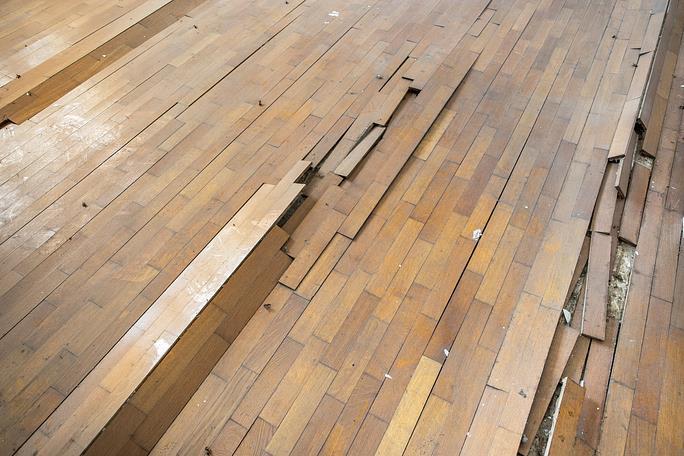
The subfloor is the foundation on which everything else sits. If it is uneven, damaged, damp, or poorly prepared, every one of those problems will eventually manifest in the finished floor — squeaking, movement, gapping, cupping, or boards that begin to lift at the edges.
Professional subfloor preparation takes time. It involves assessing the existing surface, taking moisture readings at multiple points, levelling where required, repairing damaged sections, and in some cases applying primers or damp-proof membranes before any timber goes down. It is not glamorous work, and it is not quick — which is precisely why cheap installers skip or rush it.
The consequences of inadequate subfloor preparation are not always immediate. In some cases, the floor looks and feels perfectly acceptable for the first few months. Then the movement starts. Then the gaps appear. Then the boards begin to lift. By the time the problem is visible, the cost of rectification — which in serious cases means lifting the entire floor, addressing the subfloor properly, and relaying — can exceed the original cost of the installation.
Moisture Testing: The Step That Gets Ignored
Closely related to subfloor preparation is moisture testing — and it is one of the first things a cheap installer will skip because it adds time and requires calibrated equipment.
Wood and moisture are fundamentally incompatible. Lay timber over a subfloor with elevated moisture levels and it will move. It will cup, bow, or gap as it absorbs and releases moisture — and no amount of good installation technique can prevent this if the moisture problem was never identified and addressed.
Professional moisture testing involves taking readings from multiple points across the subfloor using hygrometers or pin meters, verifying that levels are within the acceptable range for the specific timber and installation method being used, and — if they are not — stopping work until the issue is resolved.
A cheap installer who skips this step is not taking a calculated risk on your behalf. They are transferring all of that risk to you, while collecting payment and moving on to the next job.
Inferior Adhesives and Underlays
The products used beneath and between boards make an enormous difference to the long-term performance of a wood floor — and they are entirely invisible once the installation is complete. This makes them an easy target for cost-cutting.
Specialist wood floor adhesives are engineered to bond timber to specific subfloor types, to flex with the natural movement of wood, and to maintain their bond over decades. Generic or inferior adhesives may bond adequately at first but lose their grip as the floor experiences the thermal and humidity cycles of normal domestic life. The result is boards that begin to lift, creak, or feel hollow underfoot.
The same applies to underlays in floating installations. A quality underlay provides acoustic performance, thermal insulation, and — critically — a stable, consistent base for the boards above it. A cheap underlay compresses unevenly over time, creating a floor that feels different in different areas and that puts uneven stress on board joints.
These are not visible failures in the short term. They are the kind of problems that develop slowly and become expensive once they do.
The Acclimatisation Problem
Acclimatisation — allowing timber to adjust to the temperature and humidity of the environment it will live in before installation — is a non-negotiable step in any professional wood floor installation. It is also a step that adds days to a job without adding anything visible to the finished result, which makes it appealing to cut.
Wood that goes down without adequate acclimatisation will move after installation. As it adjusts to its environment, it expands or contracts — and if it is already fixed in place when this happens, the consequences range from unsightly gapping to boards that buckle against each other.
The required acclimatisation period varies depending on wood species, board thickness, moisture content, and the conditions in the property. A professional installer factors this into the project timeline from the outset. A cheap installer often delivers the materials and begins laying immediately — or gives acclimatisation a token twenty-four hours and considers it done.
Pattern Work and Precision: Where Skill Becomes Visible
Not all installation work looks the same, and nowhere is this more apparent than in patterned floors. A herringbone wood floor installation requires precise angles, consistent spacing, a carefully planned layout centred within the room, and the patience to cut and fit individual boards around architectural features without compromising the pattern.
Done well, a herringbone floor is extraordinary. Done poorly — with slightly inconsistent angles, misaligned joints, or a layout that was not properly centred before work began — it is deeply disappointing and extremely difficult to fix without lifting and relaying the entire floor.
This kind of precision work cannot be rushed, and it cannot be delivered by someone without extensive experience of pattern installation. The difference in day rate between an experienced specialist and a cheap generalist is real — but so is the difference in outcome.
Finishing Products and Application
The finish applied to a wood floor is its primary protection against daily wear. Applied correctly, a quality oil or lacquer finish will last years in normal use and can be maintained and refreshed relatively easily. Applied incorrectly — too thinly, without proper preparation of the surface, or with an inferior product — it will begin to show wear within months.
Common finishing failures in cheap installations include finish applied over a surface that was not adequately sanded or cleaned, coats applied too quickly without adequate curing time between them, and product choices that are inappropriate for the level of traffic the floor will experience.
A poorly finished floor is not just unattractive. It leaves the timber beneath it unprotected — and unprotected wood in a domestic environment absorbs stains, moisture, and dirt in ways that can cause permanent damage.
What Happens to Staircases When Installation Is Rushed
Staircases are one of the areas where the consequences of poor workmanship are most immediately apparent — and most dangerous. A poorly fitted stair tread that is not properly secured will move under foot traffic, creating noise and, over time, a genuine trip hazard.
Hardwood staircase installation is detailed, time-consuming work. Each tread is fitted individually. Nosings need to overhang correctly and consistently. The fixing method needs to account for the specific construction of the existing staircase. None of this can be done well in a hurry — and a cheap installer working to an unrealistic day rate will be in a hurry.
If you are having a staircase done alongside your flooring, ask specifically how long the staircase element will take and what fixing method will be used. Vague answers to specific questions are informative.
The Reclaimed Wood Trap
Reclaimed wood flooring is a premium product that requires more preparation, more careful selection, and more skilled installation than new timber. It is not a product that lends itself to shortcuts — and an installer who quotes a standard rate for reclaimed timber work either does not understand what the job involves or is planning to cut corners to make the numbers work.
Reclaimed boards vary in dimension, moisture content, surface condition, and structural integrity. They need to be sorted, assessed, and prepared individually before installation begins. The installation itself requires greater patience and skill because the natural variation in the material demands constant adjustment.
Done properly, reclaimed timber produces floors of extraordinary character. Done cheaply, it produces floors that look rough rather than rustic — and that develop structural problems as boards with undetected moisture issues begin to move after laying.
The Real Cost of Getting It Wrong
It is worth being direct about what rectification actually costs, because this is the number that makes the cheap quote look very different in retrospect.
If a wood floor fails because of inadequate subfloor preparation, the rectification process typically involves lifting the entire floor, addressing the subfloor issue properly, and sourcing replacement materials — because the boards that were lifted will rarely be reusable in good condition. The cost of this is typically significantly higher than the cost of the original installation, and in many cases it is not covered by any warranty because the original installer either does not offer one or has become unreachable.
Wood floor restoration can address surface-level wear and finish failures — sanding back and refinishing a floor that has been poorly finished or that has suffered superficial damage is entirely achievable. But it cannot fix structural failures caused by poor subfloor preparation or inadequate moisture management. Those require lifting and relaying.
The maths, when viewed over a five-year horizon rather than the day of installation, rarely favours the cheap quote.
How to Spot a Reliable Installer Before You Commit
Identifying a professional installer before work begins is genuinely possible if you know what to look for.
A reliable installer will visit the property before quoting and will want to inspect the subfloor. They will ask about your lifestyle, your heating system, and your expectations for the floor. They will be able to explain their moisture testing process and what they will do if levels are too high. They will give you a realistic timeline that includes acclimatisation time and subfloor preparation. They will be specific about the products they use and why.
A wood flooring company that takes the time to ask the right questions before quoting is demonstrating — before work has even begun — the kind of attention to detail that produces good floors.
Ask to see previous work. Ask for references from customers whose floors have been down for at least two years. Ask what happens if a problem develops after installation. The answers to these questions will tell you a great deal about what the working relationship will actually look like.
The Design Conversation You Should Have Before Anything Else
One final area where cheap installers consistently let customers down is in the design conversation — or the absence of one. Laying direction, pattern choice, board width, finish type, and colour all have a significant impact on how a floor will look and perform in a specific space. Getting these decisions right requires experience and genuine expertise.
A wood flooring design service that takes the time to understand how the space is used, how it is lit, and what aesthetic the customer is looking for will produce a result that feels considered and intentional. A cheap installer who takes a brief over the phone and shows up with whatever is in the van will not.
The design conversation costs nothing extra. It is simply what professional flooring companies do — because they understand that the best technical installation in the world is disappointing if the wrong floor was chosen in the first place.
FAQ
Q: How much more should I expect to pay for a professional installer compared to a cheap one?
This varies by region and project complexity, but as a general principle, quotes that are more than fifteen to twenty per cent below the middle of the market warrant careful scrutiny. Ask specifically what is included in the lower quote and compare line by line — the differences in what is and is not included are usually where the gap is explained.
Q: What should I do if I have already had a poor installation and the floor is failing?
Start by documenting the problems — photographs, dates, and a written description of what is occurring. Contact the original installer in writing and request a response. If they are unresponsive or unwilling to rectify, seek an independent assessment from a qualified wood flooring specialist who can identify the cause of the failure and provide a written report. This report will be important if you pursue a formal complaint or seek compensation.
Q: Are cheap installers always bad?
Not always. There are skilled installers who price modestly because they have low overheads or are building a reputation. The red flags to watch for are not a low price alone, but a low price combined with unwillingness to discuss subfloor preparation, vague answers to specific questions, no interest in visiting the site before quoting, and an inability to provide references or examples of previous work.
Q: Can a badly installed floor be saved without full replacement?
It depends on the nature of the problem. Surface finish failures can often be addressed through professional restoration — sanding and refinishing. Structural failures caused by poor subfloor preparation or moisture issues typically cannot be addressed without lifting and relaying. An assessment by a qualified specialist will establish which situation you are in.
Q: What warranty should a professional installer offer?A reputable installer should offer a clear workmanship warranty — typically a minimum of one to two years — that covers defects arising from the installation process. This is separate from any manufacturer warranty on the materials. Ask to see the warranty terms in writing before work begins, and be cautious of installers who offer only verbal assurances.
Q: Is it worth paying for a flooring design consultation before deciding on a floor?
Yes, without question. The design decisions made before installation begins — board width, species, laying direction, pattern, finish — are irreversible once the floor is down. An hour spent with an experienced specialist getting these decisions right is among the most cost-effective investments you can make in the overall project.
